BigBoss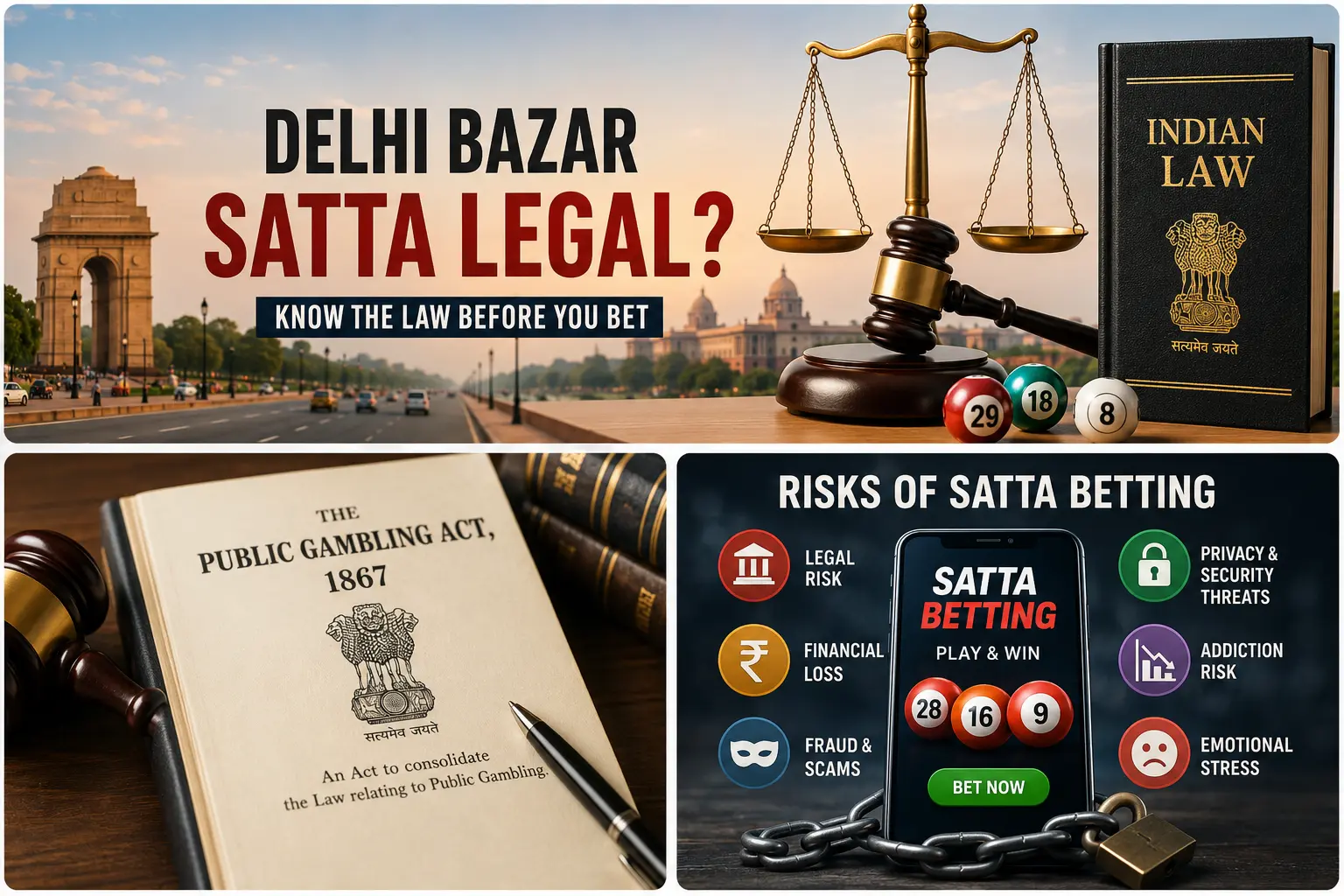
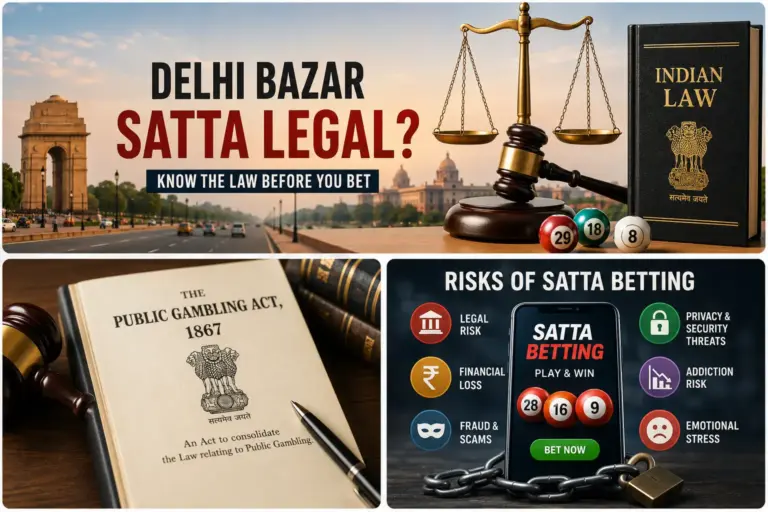
Is Delhi Bazar Satta Legal? you mean a Satta/Matka-style gambling operation in which participants wager money on numbers or chance-based outcomes, you should not assume that it is legal merely because it is advertised online or operated through local agents. Delhi has gambling legislation, including the Public Gambling Act, 1867, which specifically applies to Delhi and addresses public gambling and common gaming houses.
The exact legal position can depend on the particular activity, how it is conducted, where it operates, and whether another law applies. Because gambling law is a legal matter that can change and may involve significant penalties, anyone facing an actual legal issue should obtain advice from a qualified Indian lawyer.
What Is Delhi Bazar Satta?
“Delhi Bazar Satta” generally refers to a form of Satta or Matka-style number betting associated with wagering money on numbers or outcomes.
Unlike an ordinary purchase, the participant puts money at risk based on an uncertain result. The activity may be promoted through websites, messaging channels, agents, or physical locations.
The important legal question is therefore not simply what the activity is called. The relevant questions include:
- Is money being wagered?
- Is the outcome based primarily on chance?
- Is a person or organization accepting or facilitating bets?
- Is a physical gaming house involved?
- Is the activity conducted online?
- Which law applies to the particular transaction?
These details can affect the legal analysis.
Is Satta Legal in Delhi?
Satta betting should not be treated as a legally authorized form of gambling in Delhi simply because a website, agent, or betting group offers it.
The Public Gambling Act, 1867 expressly includes Delhi in its territorial scope. The legislation provides offences relating to keeping or managing a common gaming house and being found in such a gaming house.
Delhi Police also lists the Public Gambling Act, 1867 among the laws applicable in Delhi.
This means that claims such as “Delhi Satta is government approved” or “the game is legal because it is available online” should not be accepted without independent verification.
A key distinction
There is a difference between:
- An activity being accessible, and
- An activity being legally authorized.
A website can be accessible to Indian users without that fact alone establishing that its particular gambling activity is lawful in Delhi.
What Does the Public Gambling Act Say?
The Public Gambling Act, 1867 was enacted to address public gambling and common gaming houses. It defines a common gaming-house in terms of a place where gaming instruments are kept or used for the profit or gain of the person operating or maintaining the premises.
The Act contains provisions dealing with:
- Keeping or managing a gaming house
- Being found in a gaming house
- Police powers to search suspected gaming premises
- Evidence relating to gaming houses
- Subsequent offences
The legislation therefore provides an important part of the legal framework for gambling in Delhi.
However, applying an old statute to a particular modern online arrangement can involve additional legal questions. The fact that the law exists does not by itself answer every question about a specific website or digital betting arrangement.
Does the Law Apply to Online Satta?
Online gambling raises additional legal issues because the traditional gambling laws were not necessarily drafted specifically for today’s internet-based platforms.
That does not mean that an online Satta website is automatically legal.
The legality of an online betting operation can depend on factors such as:
- The nature of the game
- Whether the activity is predominantly based on chance
- Where the operator is located
- Where participants are located
- How payments are processed
- Whether the activity falls under a specific state or central law
- Whether the operator has a lawful authorization, where one is required
Therefore, “online” is not itself a legal exemption.
If a platform claims that its Delhi Bazar Satta service is “100% legal,” that claim should be independently verified against the applicable law rather than accepted as proof.
Why Satta and Lottery Are Different
Another common misconception is that Satta is automatically legal because some lotteries can legally operate in India.
India has a specific Lotteries (Regulation) Act, 1998. The Act regulates lotteries and sets conditions under which a State Government may organize, conduct, or promote a lottery.
Importantly, the Act establishes specific requirements for permitted state lotteries. For example, the statutory conditions include requirements concerning tickets, government control, draws, and other safeguards.
A Satta operation should therefore not be assumed to be a lawful lottery simply because both involve numbers and prizes.
The legal classification of an activity matters.
What Are the Risks of Satta Betting?
Participating in an unauthorized gambling operation can involve several types of risk.
Legal risk
Depending on the circumstances and applicable legislation, people involved in gambling activities can potentially face legal consequences.
The Public Gambling Act contains provisions addressing gambling houses and people found in such establishments.
Financial risk
Satta is inherently risky because money is placed on uncertain outcomes. Participants can lose money, and informal operators may provide limited or no meaningful consumer protection.
Fraud risk
Unregulated betting services can create additional risks, including:
- Fake winning claims
- Withdrawal problems
- Disputes over results
- Account closures
- Requests for additional payments
- Misuse of personal information
These risks are separate from the underlying gambling question.
Privacy and security risk
Websites or messaging groups asking users to submit identity documents, bank details, payment information, or other sensitive data should be approached cautiously.
Are Satta Websites Automatically Legal?
No.
A website’s existence does not establish that its activities are legally authorized in Delhi.
Be especially cautious about statements such as:
- “Government approved”
- “100% legal”
- “Legal everywhere in India”
- “No risk”
- “Guaranteed withdrawals”
Such marketing language is not a substitute for checking the applicable law and the operator’s actual legal status.
If you are considering a particular website, check its legal entity, jurisdiction, terms, licensing claims, and the specific law it says authorizes its activities. A generic statement that “online betting is legal” is not enough.
What About Betting Taxes?
Another misconception is that paying tax automatically makes gambling legal.
It does not.
Tax rules and gambling legality are separate legal questions. The existence of taxation provisions or tax obligations does not by itself grant permission to operate or participate in an otherwise prohibited activity.
For that reason, someone should not interpret a tax-related payment or deduction as evidence that a particular Satta operation is legally authorized.
How to Check Whether a Gambling Activity Is Legal
If you want to determine whether a specific betting activity is lawful, use a more careful process.
1. Identify the exact activity
Determine whether it is:
- A state-authorized lottery
- Sports betting
- Casino-style gaming
- Number-based Satta/Matka
- A skill-based game
- Another form of wagering
2. Identify where the participant is located
Gambling laws can vary across Indian states and territories. Do not rely on information written for another state.
3. Identify the operator
Find out who actually operates the service and where that entity is based.
4. Check the relevant legislation
For Delhi, the Public Gambling Act, 1867 is an important starting point. Delhi Police itself lists the Act among the laws applicable in Delhi.
5. Do not rely only on promotional claims
A betting site’s own statement that it is legal is not independent legal verification.
6. Seek professional advice for a real dispute
If you have received a police notice, been contacted about gambling activity, lost a significant amount of money, or are considering operating a betting service, speak directly with a qualified lawyer familiar with Indian gambling law.
FAQs About Delhi Bazar Satta
Is Delhi Bazar Satta legal in India?
There is no blanket rule that makes Satta betting legal simply because it is available online or through local operators. Delhi has the Public Gambling Act, 1867, which addresses public gambling and common gaming houses.
Is Satta legal in Delhi?
Satta should not be assumed to be a legally authorized gambling activity in Delhi. The applicable legal position depends on the exact nature and circumstances of the activity.
Is online Delhi Satta legal?
Being online does not automatically make a Satta operation legal. The specific game, operator, location, and applicable laws need to be considered.
Is Delhi Satta a government lottery?
A private Satta operation should not be confused with a state lottery. The Lotteries (Regulation) Act, 1998 establishes specific conditions for government-organized lotteries.
Does paying tax make Satta legal?
No. Tax obligations and gambling legality are separate questions. Paying or withholding tax does not, by itself, authorize an otherwise unlawful gambling activity.
Can I trust a website that says Delhi Bazar Satta is legal?
Do not rely solely on the website’s claim. Verify the operator, its claimed authorization, and the laws applicable to your location.
What should I do if I have a legal problem involving Satta?
If you have received a notice, been questioned by authorities, or have another specific legal issue, consult a qualified Indian lawyer and provide them with the relevant documents and facts.
Conclusion
So, is Delhi Bazar Satta legal? The safest answer is that you should not treat Delhi Bazar Satta or Satta betting as a generally authorized form of gambling in Delhi. The Public Gambling Act, 1867 specifically applies to Delhi and regulates public gambling and common gaming houses.
Online availability does not automatically establish legality, and Satta should not be confused with a state-regulated lottery under the Lotteries (Regulation) Act, 1998.
Because gambling law can involve fact-specific questions and may change, this article is general information rather than legal advice. For a specific case, consult a qualified lawyer in India.
Also Check Delhi Bazar Chart
About the Author